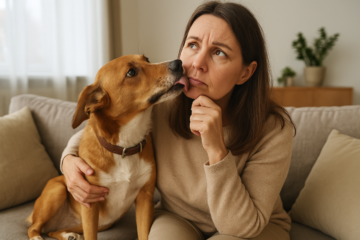
Why My Dog Lick Me So Much Compared to Others?
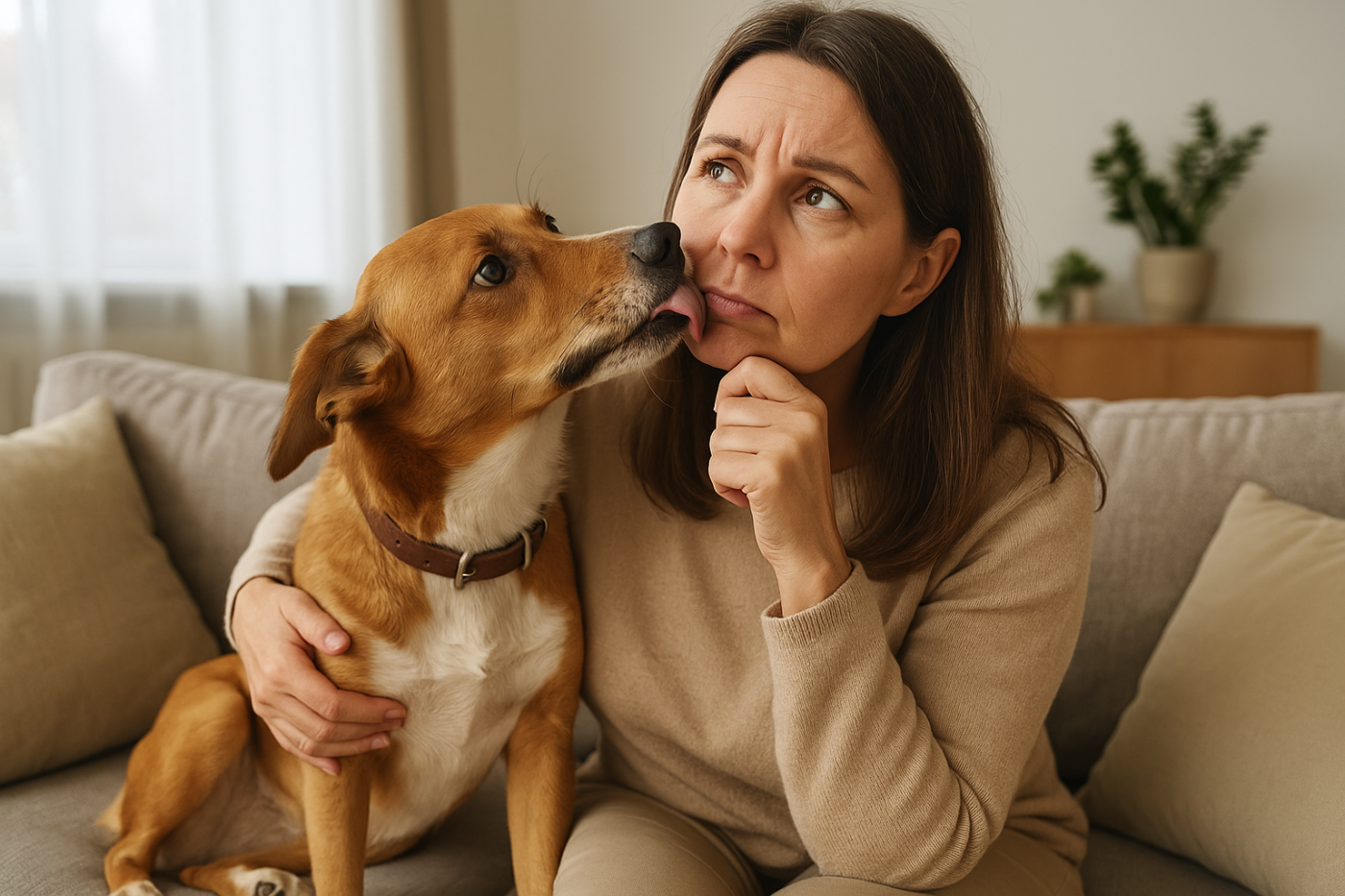
Some dogs lick far more than others, and this often comes down to personality rather than training.
Dogs that are:
- Highly sensitive
- Very social
- Emotionally dependent
- Naturally submissive
are more likely to use licking as their primary form of communication.
This is why two dogs raised the same way can behave very differently.
👉 This is also where dog personality plays a much bigger role than breed alone.
When Licking Becomes Excessive
While occasional licking is normal, excessive licking may be a concern if:
- It happens constantly and is hard to interrupt
- Your dog appears restless or distressed
- Licking increases when you leave or ignore them
- It’s paired with other anxious behaviours
If licking feels compulsive, it’s worth assessing your dog’s emotional needs — and speaking with a vet or behaviourist if needed.
Does Your Dog’s Personality Affect Licking?
Absolutely.
Some dog personality types are naturally more inclined to licking behaviour, including:
- Loyal, people-focused dogs
- Highly social dogs
- Sensitive or emotionally aware dogs
Understanding your dog’s personality can explain why they behave the way they do — and how to respond appropriately without reinforcing unwanted habits.
If you’re unsure whether your dog’s licking is affection, anxiety, or attention-seeking, starting with personality is often the clearest answer.
Take the Dog Personality Quiz
If your dog’s behaviour sometimes confuses you, our Dog Personality Quiz helps identify the underlying traits that influence how your dog interacts, bonds, and communicates.
The quiz focuses on:
- Lifestyle and environment
- Emotional needs
- Social preferences
- Independence vs attachment
👉 Take the Dog Personality Quiz here:
https://mypets.id/dog-personality-quiz/
It only takes a couple of minutes and can help you better understand — and support — your dog.
Final Thoughts
So, why does your dog lick you so much?
In most cases, it’s a mix of affection, communication, and personality. Paying attention to when and how your dog licks can reveal far more than the behaviour itself.
When in doubt, understanding your dog’s personality is one of the most effective ways to build a happier, healthier relationship.
Important Note
This article provides general guidance only. Every dog is unique, and individual behaviour can vary based on health, training, and environment. Always consult a professional if you’re concerned about your dog’s wellbeing.