Why Does My Dog Always Stare at Me?
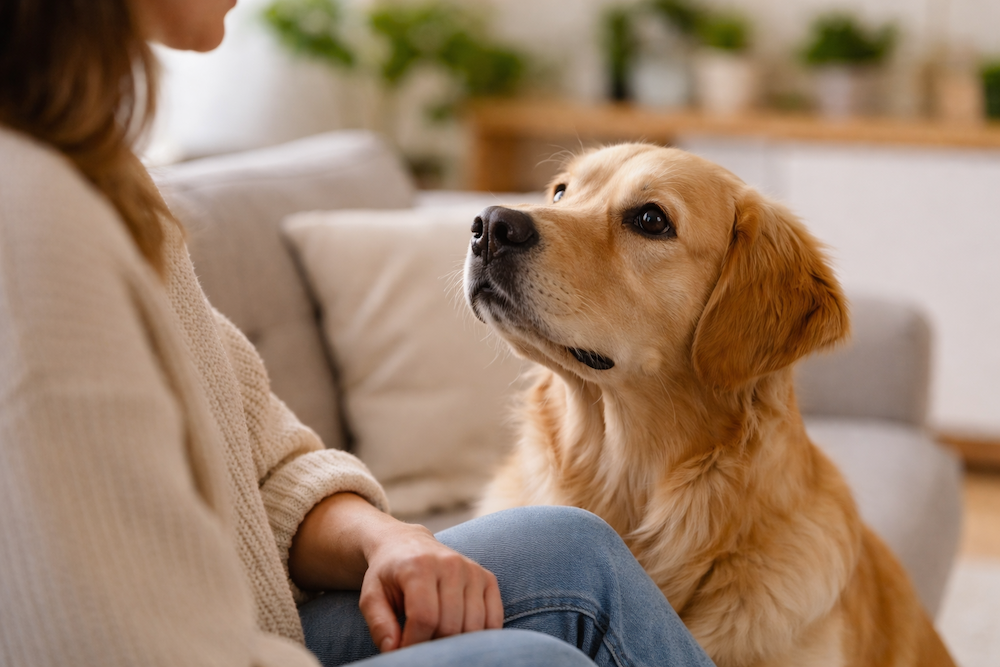
If your dog seems to stare frequently or intensely, personality plays a major role.
Dogs that are:
- Very people-focused
- Emotionally sensitive
- Highly bonded to one person
- Naturally submissive or loyal
are more likely to watch their owners closely throughout the day.
For these dogs, staring is a way of staying emotionally aligned with you — almost like checking in.
Why Does My Dog Stare at Me Constantly?
Constant staring can sometimes indicate more than simple curiosity.
It may be linked to:
- Attention-seeking behaviour (especially if it results in a response)
- Anxiety or insecurity
- Over-attachment
- Lack of mental stimulation
If your dog stares at you constantly and appears restless, clingy, or distressed when ignored, it’s worth looking deeper at their emotional needs.
When Staring Might Be a Concern
Occasional staring is normal. However, it may need attention if:
- Your dog appears tense or frozen while staring
- The stare is paired with whining, pacing, or panting
- It increases during stressful situations
- Your dog struggles to relax independently
In these cases, staring may be a coping mechanism rather than communication.
Does Your Dog’s Personality Affect Staring?
Absolutely.
Some dog personality types are naturally more observant, emotionally connected, or owner-focused than others. These dogs often rely on eye contact as their primary way of engaging with the world around them.
Understanding your dog’s personality helps explain:
- Whether staring is affection or anxiety
- How much independence your dog needs
- How to respond without reinforcing unwanted behaviour
Personality gives context to behaviour — without jumping to conclusions.
Take the Dog Personality Quiz
If you’re unsure whether your dog’s staring is normal, emotional, or something that needs support, our Dog Personality Quiz can help.
The quiz focuses on:
- Emotional traits
- Social preferences
- Independence vs attachment
- How your dog naturally communicates
👉 Take the Dog Personality Quiz here:
https://mypets.id/dog-personality-quiz/
It takes just a couple of minutes and can offer clarity on behaviours like staring, following, or clinginess.
Final Thoughts
So, why does your dog stare at you?
In most cases, it’s a sign of connection, communication, or trust — shaped by personality and environment.
Paying attention to when and how your dog stares will tell you far more than the stare itself.
Important Note
This article provides general guidance only. Every dog is unique, and behaviour can vary based on training, health, and environment. If you’re concerned, consult a qualified professional.